


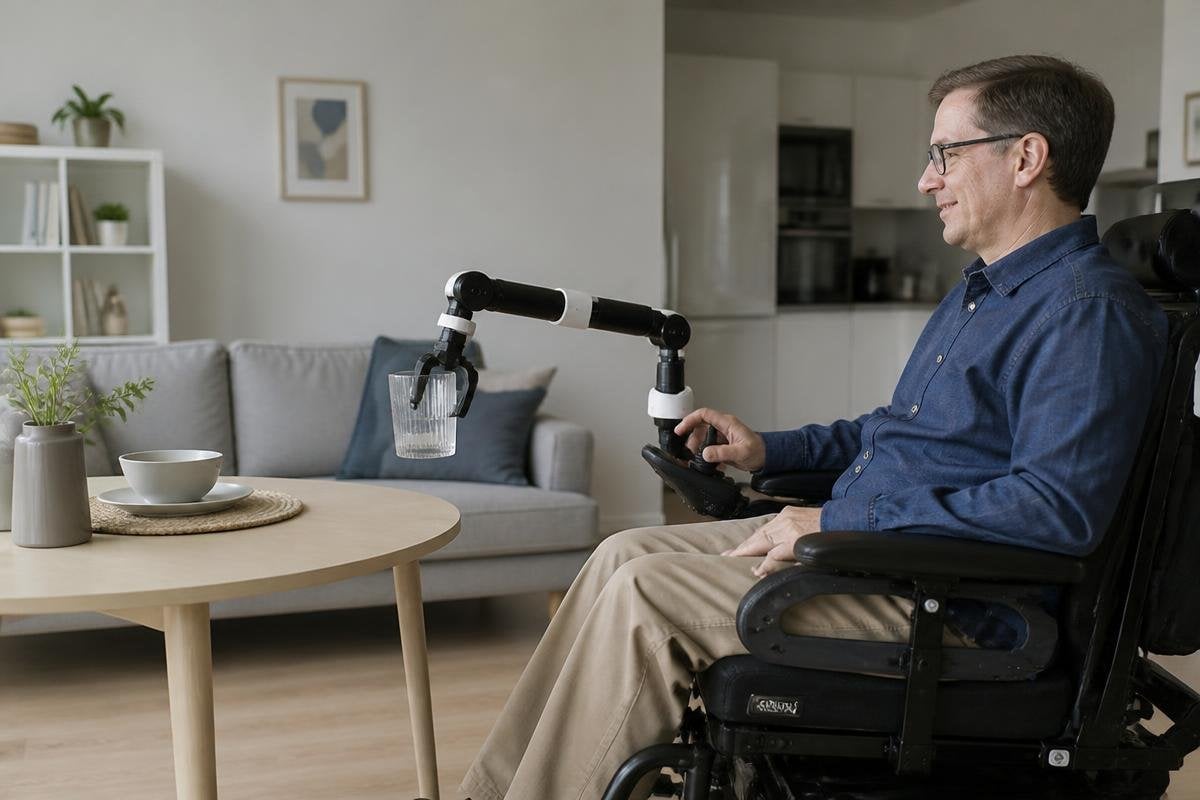
A robot can help with a narrow task that makes daily life easier, from opening a door to moving an object within reach. The useful question is not whether a robot looks human, but whether it gives a person more control with less effort.
Quick read
- Robotic arms can help with reaching, lifting, and handling objects.
- Powered wheelchairs and exoskeletons can support movement when a person chooses to use them.
- Good design starts with the person, the task, the space, and the cost.
Where robots can help
Robotics can support people with physical, sensory, or communication needs. A robotic arm mounted to a wheelchair, for example, could pick up an item from a low shelf or bring a cup from a table.
The person still decides what should happen; the robot handles the reach and movement.
That division matters. A person may have enough strength to choose an object but not enough control to lift it safely. A robot can take on the physical work while the person keeps control through a joystick, switch, voice command, eye tracking, or another input method.
Powered wheelchairs already show why control settings matter. A chair may need to move through a narrow doorway, stop close to a desk, or turn in a crowded room. Sensors can help with steering, but the person must be able to override the system and stop the chair quickly.
Movement support and physical work
Exoskeletons use motors, springs, or other mechanical parts to support a person’s legs, hips, or upper body. A system for rehabilitation may guide repeated steps. A system for work or daily movement may reduce the effort needed to stand or walk.
The fit has to be exact. A joint that moves a few centimeters out of line can cause pain or limit motion. Weight matters too. A device that adds several kilograms may help with one task and make another task harder, especially when a person must transfer between a chair and a bed.
Robotic hands can also help with grip. They may hold a tool, open a container, or keep an object steady while the person works. The hand needs force limits and a reliable stop command, since a mistake near skin or fingers can cause harm.
Communication and home tasks
Robots can give physical form to a command. A person who cannot reach a light switch might ask a home robot to press it. Someone with limited speech may use a tablet, switch, or eye-tracking system to select the command.
The robot still needs to understand the home around it. Floors, pets, loose cables, narrow spaces, and changing light can affect movement. A task that works in a clear room may fail when a chair has been moved or an object sits at a different angle.
Those limits matter when you compare a robot’s home task with the conditions used to test it. Robot 24 reports on assistive robots, their makers, and related research, giving you facts to check before you rely on a system for daily support.
Privacy also needs a place in the design. A home robot may use cameras, microphones, or location data. You should know what the system records, where that data goes, and whether the robot can work with its sensors turned off.
Cost and the limits of current systems
Price can decide whether a device helps anyone outside a small pilot. The purchase price may be only one part of the bill. Fitting, repairs, software updates, batteries, training, and changes to a home can add more cost.
Support is another limit. If a motor fails or a sensor loses its settings, the person may lose access to a task they had come to depend on. A seller should explain repair times, spare parts, warranty terms, and what happens when the product reaches the end of its service life.
I’d judge any assistive robot by the control it gives the person, not by how human the machine looks.
A practical checklist
Use these questions before choosing a system:
- Name the task: What exact action should the robot handle, and how often does it occur?
- Check control: Can the person start, stop, pause, and override the robot without help?
- Measure the space: Will it fit through doors, turn beside furniture, and reach the needed surfaces?
- Test the body fit: Does it match the person’s height, strength, range of motion, and transfer method?
- Price the full service: Include fitting, training, repairs, batteries, software, and replacement parts.
- Ask about data: Find out what cameras or microphones record and how the owner can remove that data.
A useful robot should make one part of life more manageable without creating a new daily burden. The next step is a small trial of the exact task, in the exact room, with the person who will use it.
