


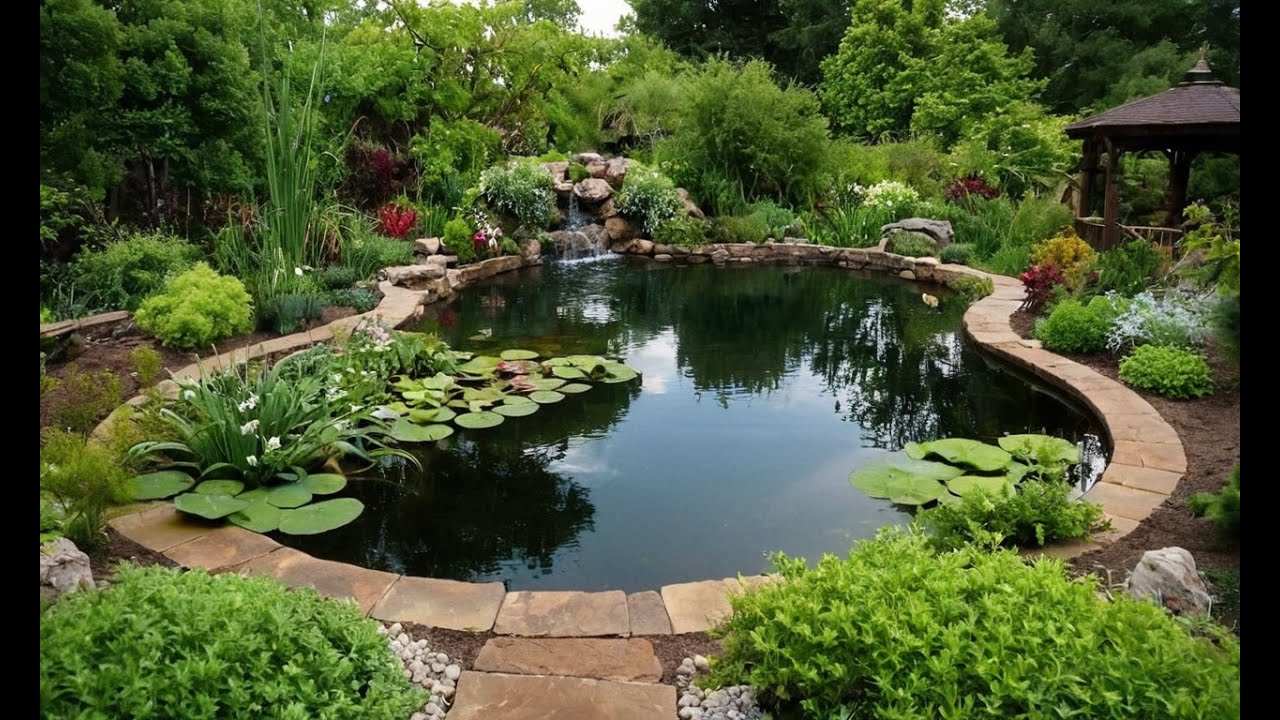
The Absolute Beginner’s Guide to Pond Plants: 4 Essential Types Every Pond Needs
Adding water to a landscape brings life to a garden, but keeping that water clear and balanced requires a smart selection of pond plants. If you are setting up your first water feature, jumping into aquatic gardening can feel overwhelming. Luckily, you don’t need dozens of species to start. Mastering the four core categories of pond plants will help you build a self-sustaining aquatic garden with minimal fuss.
1. Deep-Water Floating-Leaf Plants (Water Lilies)
When people picture a classic pond, they see water lilies (Nymphaea). These iconic pond plants root in soil at the bottom of your pond while extending long stems to rest their leaves and flowers directly on the surface.
-
Primary Role: Shade and cover.
-
Why You Need Them: By covering 40% to 60% of the water’s surface, water lilies block intense sunlight. This keeps the water cool during hot months and starves nuisance algae of the light it needs to grow.
2. Submerged Oxygenators
Often called “pond weed,” submerged plants grow entirely underwater. Popular options include Hornwort (Ceratophyllum demersum) and Anacharis (Elodea).
-
Primary Role: Water clarity and oxygen production.
-
Why You Need Them: These plants absorb excess dissolved nutrients directly from the water column while pumping vital oxygen back into the pond during daylight hours. They also offer essential protection for small fish.
3. Marginal (Bog) Plants
Marginal pond plants thrive in the shallow water along the perimeter or in saturated soil surrounding the pond edge. Top choices include Blue Flag Iris, Pickerel Weed, and Canna Lilies.
-
Primary Role: Edge blending and heavy nutrient filtration.
-
Why You Need Them: Marginals soften harsh liner edges and rock work, giving your feature a natural look. Their dense root systems serve as bio-filters, absorbing nitrates before algae can consume them.
4. Free-Floating Plants
Free-floating varieties like Water Lettuce (Pistia stratiotes) and Frogbit (Hydrocharis morsus-ranae) float across the surface with their root systems suspended underneath.
-
Primary Role: Rapid surface coverage and chemical-free filtration.
-
Why You Need Them: No planting, pots, or dirt required—simply drop them onto the surface. Their feeder roots act as natural filters, removing unwanted nutrients directly out of the water.
Pro Tip: Balance is key. Aim for a mix of all four types to create a naturally self-regulating ecosystem.
